
These Polish potato pancakes, called placki ziemniaczane, are crisp around the edges and soft in the middle. All you need is grated potato, onion, an egg, a little flour, and hot oil.
This easy family recipe takes about 35 minutes, depending on how many pancakes fit in your pan. Serve them with sour cream, sprinkle them with sugar, or add a warm sauce for dinner.
The two steps that make the biggest difference are squeezing out the extra liquid and saving the white potato starch that settles underneath it. I’ll show you how to do both, plus how to make a batch without flour.
What Are Placki Ziemniaczane?
Placki ziemniaczane are Polish pancakes made from raw grated potatoes. They are fried in shallow oil until golden, with thin, crisp edges and a soft potato center.
Many families add onion and black pepper. Others leave them out, especially when serving the pancakes with sugar. A little flour helps hold the batter together, but you can also use the potatoes’ own starch.
They work as a simple lunch, a meatless dinner, or a side dish. However you serve them, they’re best hot from the pan.
How to Say Placki Ziemniaczane
A simple English guide is PLAHTS-kee zhem-nyah-CHAH-neh. Say it slowly at first, then put the two words together.
Placki means pancakes or flat cakes, and ziemniaczane means made from potatoes. The potato’s Polish name, ziemniak, is related to ziemia, meaning earth.
So if you’re wondering what placki ziemniaczane means in English, it’s simply potato pancakes.
Placki, Plendze, Plińce: What Poles Call Them
The name can change depending on where you are in Poland:
- Greater Poland: plendze or plyndze.
- Kashubia: plince.
- Elsewhere: you may hear plińce or placki kartoflane.
- Cieszyn Silesia: placki z blachy are a related version cooked on a hot plate.
In the Podhale highlands, you’ll also find moskole. These are different: they use cooked, mashed potatoes rather than raw grated potatoes.
For this recipe, I use placki ziemniaczane. It makes clear which kind of pancake we’re cooking, even if your family knows them by another name.
Where Placki Ziemniaczane Came From
Potatoes weren’t always part of Polish cooking. They became an everyday food over time, especially during the 1800s, when they helped families make filling meals from a few cheap ingredients.
Grating them into pancakes was one way to put them to use. With a hot pan and a little fat, a bowl of potatoes could become lunch. Later, potato dishes remained a familiar part of home cooking and milk-bar meals.
Placki also belong to a wider family of European potato pancakes, alongside Jewish potato latkes and German Kartoffelpuffer. The ingredients overlap, but the texture and toppings depend on the cook.
If you enjoy grated-potato dishes, try babka ziemniaczana, the baked grated-potato cousin. It gives you another way to turn simple potatoes into dinner.
Why I Love This Recipe
These Polish potato pancakes are one of my family’s favorite side dishes. I love that the same simple recipe works with both sweet and savory toppings. If you’re serving them with sugar, I recommend leaving out the onion.
They also bring out strong opinions! Sweet or savory? With onions or without? Topped with goulash or just sour cream? Everyone seems to have a favorite.
For me, the best part is the edge: thin, golden, and crisp, with a soft middle. You don’t need a long ingredient list to get there. Good potatoes, a little patience with the draining, and hot oil do most of the work.
Sweet or Savory? Both Are Traditional
One of the best things about Polish potato pancakes is that you can enjoy them in different ways. Some families serve them with sour cream, fresh dill, mushroom sauce, or rich Polish goulash. Others love them with a sprinkle of sugar, just like many grandparents have made them for years.
If you plan to serve your placki ziemniaczane with sugar, it’s best to leave out the onion and black pepper. This gives the pancakes a milder flavor that works perfectly with sweet toppings.
Necessary Equipment
- A box grater with fine holes
- Two bowls: one for the potatoes and one for the liquid
- A clean, tightly woven kitchen towel
- A large skillet and a thin spatula
- A tablespoon for portioning and paper towels for draining
Have everything ready before grating so you can mix and fry the potatoes without a long wait.
Key Ingredients & Substitutions
Russet potatoes: Their starch helps the pancakes hold together and brown well. Yukon Gold potatoes can also work, though the texture will be a little different. For soft dumplings made from cooked potatoes, try kopytka.
Onion: Grate it on the fine holes rather than chopping it. This mixes it evenly through the batter without large pieces. Leave it out for a milder pancake to serve with sugar.
Egg: One large egg helps bind the mixture. See the FAQ for an egg-free option.
All-purpose flour: Start with 2 tablespoons once you’ve returned the potato starch. Add up to another 2 tablespoons if the batter needs help holding together. Too much flour can make the pancakes heavy.
Salt and black pepper: Keep the salt, even for a sweet topping, but use less if you prefer. Leave out the pepper for the sweet version.
Oil: Use a neutral oil, such as canola or sunflower oil. Lard is another option for frying.
Lemon juice: An optional ½ teaspoon can help slow the potatoes from turning gray. It won’t replace the need to cook the batter soon after mixing.
Step-by-Step Instructions
1. Grate and Squeeze the Potatoes
Peel and wash the potatoes. Grate them on the fine holes of a box grater, then grate the onion if using.
Place the mixture in a clean kitchen towel over a bowl. Gather the towel and squeeze firmly to remove the extra liquid. Keep the liquid in the bowl—you need the starch hiding in it.
Transfer the drained potatoes to a second bowl. Leave the liquid undisturbed for about 10 minutes. While it settles, get the remaining ingredients and your pan ready.
Slowly pour away the liquid, leaving the chalky white layer at the bottom. Scrape that starch back into the grated potatoes. Don’t rinse it away.
2. Mix the Batter
Add the egg, salt, pepper if using, and 2 tablespoons of flour. Add the optional lemon juice, then stir until everything is mixed.
The batter should be moist and easy to spoon, without a pool of liquid around it. If it still seems too loose after draining, add the remaining flour a tablespoon at a time, up to ¼ cup total.
Stir the batter between batches, as the potatoes may release a little more liquid while you cook.
3. Heat the Oil
Pour about ¼ inch of neutral oil into a large skillet. Heat over medium-high heat until a small bit of batter sizzles right away. If you use a thermometer, aim for about 340–350°F.
The oil should be hot but not smoking. Adjust the heat as you cook: lower it if the pancakes brown before the middle cooks, or raise it slightly if they barely sizzle.
4. Fry in Small Batches
For small pancakes, add about 2 tablespoons of batter per pancake. Flatten each one to about ¼ inch thick, leaving space between them.
Cook for about 3–4 minutes per side, until golden brown and cooked through. Wait until the first side is firm and golden before turning.
Fry one pancake first if you’re unsure about the batter. If it breaks apart, check that you’ve returned the starch and give the first side more time before flipping. Add a little more flour only if needed.

5. Drain and Serve
Transfer the pancakes to paper towels to drain briefly, then serve while hot.
Avoid piling them into a deep stack, which traps steam and softens the edges. If you’re finishing several batches, keep the cooked pancakes in a single layer in a 200°F (95°C) oven.
No-Flour Potato Pancakes
For a flourless batch, use 1½ pounds (680 g) russet potatoes, 1 large egg, and 1 teaspoon salt, plus neutral oil or lard for frying. This simple version leaves out the onion and pepper as well as the flour.
Finely grate the potatoes, then squeeze them in a clean towel over a bowl. Let the collected liquid stand for about 10 minutes. Carefully pour off the water and scrape every bit of the white starch back into the potatoes.
Mix in the egg and salt. Fry one small pancake first, using about 2 tablespoons of batter. Let the underside turn golden before flipping it gently.
These pancakes have a clear potato flavor and thin, crisp edges. They’re also more delicate than the flour version, so keep them small and don’t rush the flip. If there is very little starch at the bottom of your bowl, a little packaged potato starch can help the batter hold together.
Troubleshooting: Why Placki Fail (and the Fix)
- Soft instead of crisp: The potatoes may be too wet, the pancakes too thick, or the oil too cool. Squeeze well, spread the batter thinly, and wait for a steady sizzle.
- Greasy pancakes: Let the oil heat before adding the batter. Leave space between pancakes so the temperature doesn’t drop too much.
- Pancakes falling apart: Return the saved starch and let the first side set before turning. Fry a small test pancake before adding more flour.
- Heavy or rubbery centers: Too much flour can make the pancakes dense. Drain the potatoes properly so you don’t need extra flour to soak up the liquid.
- Dark outside, raw inside: Lower the heat a little and make thinner pancakes.
- Gray batter: Grated potatoes darken when exposed to air. Cook soon after mixing; the optional lemon juice helps slow the change.

Serving Suggestions
These crispy potato pancakes are delicious served with sour cream and fresh dill. For a more filling meal, top them with Polish pork goulash or a creamy mushroom sauce. If you like sweet flavors, try them with a sprinkle of sugar, applesauce, or sour cream with a little honey.
To make a complete Polish meal, serve them with mizeria, Polish cucumber salad, or browse my other Polish side dishes. They also pair well with roasted meats and sausages.
Placki z Gulaszem and Other Ways to Make It Dinner
For a filling dinner, spoon Polish pork goulash over hot pancakes. This is placki z gulaszem. A large pancake folded around goulash is often called placek po węgiersku, or Hungarian-style potato pancake.
Creamy Polish mushroom sauce is another good topping. Add it just before serving so the edges stay crisp. Or keep things simple with a fried egg on top and cucumber salad on the side.
If you like this kind of easy pan-fried meal, try crispy zucchini pancakes or fuczki, our sauerkraut pancakes, next.
Make-Ahead & Storage
Make ahead: Potato pancake batter is best used right after you make it. As it sits, the potatoes can turn gray and release more liquid. If you need to prep ahead, grate the potatoes shortly before cooking and keep the batter in the fridge for no more than 1–2 hours.
Refrigerator: Store cooked potato pancakes in an airtight container in the fridge for up to 3 days.
Freezer: Let the pancakes cool completely, then place pieces of parchment paper between them so they don’t stick together. Freeze for up to 3 months.
Reheating: For the crispiest results, reheat the pancakes in a 375°F (190°C) oven, an air fryer, or a dry skillet until hot and crispy again. Avoid using the microwave if possible, as it makes them soft.

FAQ
What’s the best potato to use for potato pancakes?
Russet potatoes are a good choice because they’re starchy and work well for frying. They help give the pancakes crisp edges and a soft middle. Whatever potatoes you use, squeeze out the extra liquid before mixing the batter.
Why are my potato pancakes rubbery?
Too much flour can make the centers heavy or rubbery. Wet potatoes often lead to this because you keep adding flour to thicken the batter. Squeeze the potatoes first, return their starch, and add only enough flour to help the pancakes hold together.
Why are my potato pancakes gray?
Raw grated potatoes darken when they sit in the air. Mix and cook the batter soon after grating. Adding ½ teaspoon of lemon juice can help slow the change. For this recipe, don’t soak and rinse the grated potatoes—you want to keep their starch.
What’s the difference between Polish potato pancakes and latkes?
The recipes overlap, and both vary from family to family. Polish placki are often finely grated and spread thinly in the pan, while many latkes use coarser shreds. That isn’t a strict rule, though. Toppings and family traditions vary just as much as the texture.
Can I make potato pancakes without flour?
Yes. Use the starch that settles at the bottom of the drained potato liquid to help bind the batter. The egg helps too. Follow the no-flour version above, and make the pancakes small so they’re easier to turn.
What is placki po węgiersku?
It means Hungarian-style potato pancakes. In Poland, this usually means a large potato pancake served with goulash, often folded over the filling and topped with sour cream. You can also serve the goulash over several smaller pancakes.
How do you pronounce placki ziemniaczane?
A simple guide is PLAHTS-kee zhem-nyah-CHAH-neh. Placki means pancakes or flat cakes, and ziemniaczane means made from potatoes. Say the two words slowly at first—or just call them Polish potato pancakes.
Can I make potato pancakes from leftover mashed potatoes?
You can, but they’ll be a different kind of pancake: softer and closer to a potato cake. Placki ziemniaczane use raw grated potatoes, which give them their thin, crisp edges.
If you have leftover Polish mashed potatoes, use them for mashed potato cakes instead. How much egg and flour you need will depend on how much butter, milk, or sour cream is already in the mash.
What holds potato pancakes together without flour?
Their own potato starch, along with the egg. After squeezing the potatoes, leave the liquid in a bowl for about 10 minutes. A white layer of starch will settle at the bottom. Pour off the liquid and stir that starch back into the potatoes.
What is the secret to the best potato pancakes?
Squeeze out the extra liquid, return the potato starch, and heat the oil before you start frying. Keep the pancakes thin and leave room between them. Those simple steps make a bigger difference than adding more ingredients.
Can I make placki ziemniaczane without egg?
Yes. Leave out the egg, return all the saved potato starch, and start with 1 extra tablespoon of flour or potato starch to help bind the batter. Fry a small test pancake first. Egg-free pancakes are more delicate, so keep them small and wait until the first side is firm before turning.
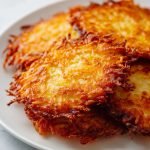
Placki Ziemniaczane (Polish Potato Pancakes)
- Total Time: 35 minutes
- Yield: About 20 small pancakes 1x
Description
These Polish potato pancakes have crisp, golden edges and soft centers. Squeeze the grated potatoes well and return their natural starch for a batter that needs only a little flour. Serve hot with sour cream, sugar, or goulash.
Ingredients
- 1 1/2 pounds (680 g) russet potatoes, peeled and washed
- 1 large Onion peeled and finely grated; omit for the sweet version
- 1 large Egg
- 1/4 cup (30 g) all-purpose flour, divided; you may only need 2 tablespoons
- 1 teaspoon Salt
- 1/4 teaspoon black pepper, optional; omit for the sweet version
- 1/2 teaspoon lemon juice, optional, to help slow browning
- Neutral oil, such as canola or sunflower oil, for frying
Instructions
- Grate and squeeze. Grate the potatoes on the fine holes of a box grater. Finely grate the onion if using. Place the mixture in a clean kitchen towel and squeeze firmly over a bowl, saving the liquid. Transfer the drained potatoes and onion to another bowl.
- Save the starch. Let the collected liquid stand for about 10 minutes while you prepare the remaining ingredients. Carefully pour off the liquid, leaving the white starch at the bottom. Scrape the starch back into the potatoes.
- Heat the oil. Add about ¼ inch of neutral oil to a large skillet over medium-high heat. Aim for about 340–350°F, or check that a small drop of batter sizzles immediately. The oil should not smoke.
- Mix the batter. Add the egg, salt, pepper if using, optional lemon juice, and 2 tablespoons of flour. Stir well. If needed, add the remaining flour a tablespoon at a time, up to ¼ cup total. The batter should be moist and spoonable, without a pool of liquid.
- Fry the pancakes. Add about 2 tablespoons of batter per pancake and flatten to about ¼ inch thick. Leave space between them. Cook for 3–4 minutes per side, until golden and cooked through. Adjust the heat as needed and stir the batter between batches. Cooking time will vary with the size of your skillet.
- Drain and serve. Drain briefly on paper towels and serve hot with sour cream, sugar, or your favorite savory topping. Avoid stacking the pancakes while they’re steaming.
Notes
Flour: 2 tablespoons is plenty if you’ve returned the potato starch and the batter holds together. Use up to ¼ cup if needed. Fry a small test pancake before adding more.
No-flour version: See “No-Flour Potato Pancakes” in the post for the full quantities and method.
Sweet version: Leave out the onion and pepper. Reduce the salt to ½ teaspoon if you prefer, then serve with sugar and sour cream.
Potato starch: Don’t soak or rinse the grated potatoes for this method. Save the starch from their drained liquid.
Keep warm: Arrange cooked pancakes in a single layer in a 200°F (95°C) oven while you finish the batch.
Storage: Refrigerate cooked pancakes for up to 3 days or freeze for up to 3 months. Reheat in an oven, air fryer, or skillet until hot.
Yield and timing: Makes about 20 small pancakes using roughly 2 tablespoons of batter each. Larger pancakes give a smaller yield; a smaller skillet needs more batches.
- Prep Time: 15 minutes
- Cook Time: 10 minutes
- Category: Main Course, Side Dish
- Cuisine: Polish
Nutrition
- Calories: 110
- Sugar: 1g
- Sodium: 230mg
- Fat: 5g
- Carbohydrates: 14g
- Fiber: 1g
- Protein: 2g
Nutrition Information
This website offers estimated nutritional details, which may vary depending on the specific ingredients used.


Never use a food processor it will not turn out as it should that’s one thing I don’t agree with
Hey Eugene! I also prefer the method with the grater, because they always come out tasting like from my family home. But sometimes i needed to use the food procesor, and they turned out with a slightly different texture but the taste was still the same :). But of course I recommend everyone use they preferred method! I hope You like the recipe!
My mother made these all the time grading them by hand. I was wondering what setting to use if using a food processor?
How lovely that it brings back memories of your mom! For the food processor, use the coarse grating setting—it gives a texture closest to hand-grated. Hope they turn out just like hers!
I used a blender but cut potatoes into chunks and carefully pulsed so texture is like hash browns.
Cold water rinse after shredding then squeeze out to remove starch – prevents turning dark.
Use matza meal or crushed crackers instead of flour as binder.
Recipe was easy. I loved the cooking tips to ensure they turned out crispy. Tastes like I remembered. Delicious!
You can illuminate the flour which sometimes gives the pancakes a somewhat gummy consistency by using bread crumbs instead. Add enough bread crumbs to produce a mixture that’s on the dry side with no liquid showing.
Tried that and went back to original as it was similar to my old family recipe. Bread crumbs doesn’t taste right.
My mum always added extra flour if the potatoes were runny. She never drained them and said that this way she could make the potatoes go further.
I would suggest using as little to no flour as possible. Drain the potatoes well but keep the liquid in a bowl. The potato starch will settle, then pour off the water and add the starch back in with the potatoes. It’s usually enough. A secret to crispy placki is that after frying, lay them on a paper bag to soak off some of the oil. Better than using paper towels.
These have always been my favorite growing up, and they still are. We would grate five pounds of potatoes. We didn’t have to worry about freezing because there weren’t any leftovers. Now I use a blender much faster and less painful. Next time I plan to use the mushroom topping.
very good I find that adding a couple spoons of cornmeal help soak up any excess liquid and make for a crispier cake
Topped with fresh bacon bits and chopped green onions, along with sour cream. Fried in a little bacon fat.
I’m making these for the first time tonight, can you tell me approximately how many these make? I’m excited to try these!
How exciting! This recipe for placki ziemniaczane typically make about 10-12 pancakes, depending on the size you make them and the recipe you’re using. Enjoy your cooking, and I hope they turn out amazing!
I grate my potatoes with my food processor and then place them in a colander to let them drain.
My Polish side of the family has always served with a side of diced tomatoes sprinkled with some salt and pepper.
Serving potato pancakes has always been a New Years Day tradition we look forward to. Along with pork of some kind, fried sauerkraut, and black eyed peas (we live in the South).
Thank you for sharing your tradition—it sounds absolutely wonderful! Using a food processor and draining the potatoes is such a smart way to save time. Serving them with diced tomatoes is a unique and tasty twist! I love how you’ve combined Polish and Southern traditions for New Year’s Day—it sounds like a feast to look forward to every year. Happy New Year to you and your family!
I love Polish Food, its the best. I was raised on Polish Food.
That’s wonderful to hear! Polish food is truly special—so many delicious flavors and comforting dishes. Thank you for sharing your love for it! 😊
These are fantastic. I take the time to grate the potatoes myself. I normally don’t make them often. A lot during Lent for Friday’s. Great if severed with Kraft Mac n Cheese!! 🙂
So happy you loved them! Grating by hand really gives the best texture. I love that you make them during Lent—and serving them with mac and cheese sounds like a fun combo!
My mother made these all the time. we toped with cottage cheese with a little salt and a lot of pepper!
No sugar and squeeze as much of the liquid as possible. I usually add milk if I need more liquid..sour cream and applesauce and butter for toppings.
That sounds delicious! 😊 Every family seems to have their own special way of making potato pancakes. Adding a little milk if the mixture feels too thick is a great tip, and sour cream, applesauce, and butter are all wonderful traditional toppings. Thank you for sharing how your family enjoys them! 💛
I grew up on these my mom made them all the time. We put butter or margarine on them with salt and pepper. Loved them and still do!!!
That’s such a classic Polish way to enjoy them! 😊 A little butter, salt, and pepper on hot potato pancakes is absolutely delicious. Thank you for sharing that memory—it sounds like your mom made them just the way many Polish families did. ❤️🥔
What about the white sauce to dip? That garlic sauce was soo good too
Yes! 😊 The white sauce is simply sour cream. In Poland, potato pancakes are often served with a dollop of sour cream, and many people like to mix in a little garlic, salt, and fresh dill or chives for extra flavor. I’m so glad you enjoyed it! 🥔❤️
Add just a little lemon juice . Barely a cap full to keep the potatoes from turning brown
That’s a great tip! 😊 A tiny splash of lemon juice can help slow browning if you’re grating the potatoes ahead of time. Just be careful not to add too much—a capful is plenty and won’t affect the flavor. Thanks for sharing your trick! 💛🥔
Mom made these ever since I was a little girl. (Polish family here too) When she was in her 90’s she was always at the stove frying them up when she knew I was stopping at her apartment for a visit. I’m in my 80’s now, and it’s getting hard to grate all those potatoes by hand! But she never complained, so I won’t either. Miss you mom!! ♥♥♥
My mom made the best potato pancakes. They were very crispy on the edges. She also used onion, even tho we would eat them with syrup or mustard. I like them both ways. During Covid I had a taste for potato pancakes. They just didn’t taste the same to me. I always used a blender for the potatoes, I think my taster was off because I had Covid at the time. I’m going to make them again. Thanks for sharing the recipe.
Hello Ronnie! I think some of the things that your mom could’ve made differently is use a thick cut grater to grate the potatoes, (blender is okay for the onions) and she could fry the pancake on lard, wich now is not so widely used, but if you are looking for more classic outcome its worth to try this way 🙂