
Every spring, when the air starts smelling like damp earth and fresh tulips, I find myself reaching for my lamb mold. Making a Polish Easter Lamb Cake — or Baranek Wielkanocny — feels like opening a little window into my grandmother’s kitchen. There would always be a dusting of powdered sugar floating in the air, the nutty scent of baked butter cake drifting through the house, and that proud moment when the lamb came out of the mold perfectly shaped.
This isn’t just dessert. The Polish Easter Lamb Cake is a symbol of renewal, hope, and celebration. In many Polish homes, this sweet little lamb sits at the center of the Easter table, sometimes tucked into the święconka basket or displayed proudly beside dyed eggs and babka. And once you bake one yourself, you’ll understand why this charming cake has been a tradition for generations.
Let’s make your own Classic Polish Easter Lamb Cake — light, buttery, and beautifully golden.
What Is Polish Easter Lamb Cake?
Polish Easter Lamb Cake, known as Baranek Wielkanocny, is a traditional butter sponge cake baked in a lamb-shaped mold for Easter. The lamb symbolizes Christ as the Lamb of God and represents renewal and resurrection in Polish Catholic tradition.
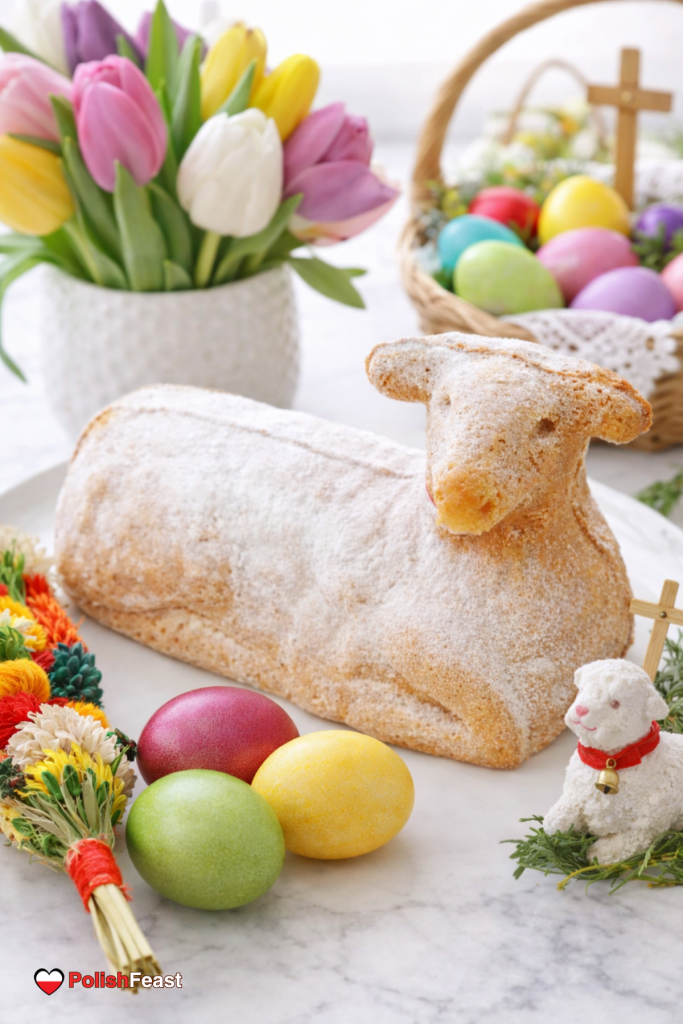
The cake itself is typically a light, airy sponge made rich with butter and eggs. After baking, it’s often dusted generously with powdered sugar to resemble wool, tied with a ribbon, or decorated with a small flag.
It’s both meaningful and delicious — which is my favorite combination.
Why I Love This Recipe
I love this Polish Easter Lamb Cake because it’s surprisingly simple yet feels incredibly special. The texture is tender with a delicate crumb thanks to whipped eggs and a touch of cornstarch. It’s lightly sweet, with a soft vanilla note and a gentle tang from yogurt or sour cream.
It’s also the kind of bake that makes everyone gather around the oven window.
And honestly? There’s something magical about unmolding that lamb and seeing all the little details — the ears, the wool texture, the sweet face — come to life.
Necessary Equipment
- 3–4 cup lamb-shaped cake mold (metal, preferably two-piece)
- Electric mixer (stand or hand mixer)
- Mixing bowls
- Whisk
- Rubber spatula
- Baking sheet (for under the mold)
- Cooling rack
A well-greased mold is absolutely essential for a clean release.
Key Ingredients & Substitutions
All-Purpose Flour + Cornstarch
This combination creates a lighter crumb, almost like cake flour. If you only have cake flour, you can substitute 1 cup cake flour for both.
Granulated Sugar
Sweetens and stabilizes the whipped eggs. Don’t reduce too much or the structure may suffer.
Unsalted Butter
Adds richness and flavor. Make sure it’s melted and cooled so it doesn’t deflate the eggs.
Eggs (Room Temperature)
Essential for volume. Room temp eggs whip up dramatically better.
Thick Plain Yogurt or Sour Cream
Adds moisture and slight tang. Full-fat Greek yogurt works beautifully.
Baking Powder + Pinch of Salt
Lift and balance.
Vanilla Extract (Optional)
Adds warmth, but traditional versions are sometimes plain.
Step-by-Step Instructions
Step 1: Preheat the Oven
Preheat to 350°F (regular bake, not convection).
Place rack slightly below center.
(This ensures even browning without over-darkening the top.)
Step 2: Prepare the Mold
Grease very thoroughly with butter or baking spray with flour.
Dust lightly with flour and tap out excess.
If using a two-piece mold, secure tightly and place on a baking sheet.
(This step prevents sticking — be generous and patient.)
Step 3: Whip Eggs and Sugar
Beat eggs and sugar on high speed for 5–7 minutes until:
- Pale
- Thick
- Fluffy
- Tripled in volume
This step gives structure — don’t rush it.
(You should be able to draw a ribbon with the batter.)
Step 4: Add Butter
Reduce speed and slowly drizzle in melted, cooled butter.
Mix only until combined.
(Gentle mixing keeps the batter airy.)
Step 5: Add Dry Ingredients + Yogurt
Whisk together flour, cornstarch, baking powder, and salt.
Gently fold dry mixture into egg mixture in two additions, alternating with yogurt.
Mix just until smooth.
Batter should be light and slightly loose — not heavy.
(Overmixing will deflate all that beautiful volume.)
Step 6: Fill the Mold
Fill mold about 85–90% full.
Leave a little space at the top.
Tap gently to remove air bubbles.
(This helps prevent gaps in the lamb’s face.)
Step 7: Bake
Bake 40–45 minutes.
Do not open oven during first 35 minutes.
Top should be golden and center firm.
Turn oven off and crack door open for 5 minutes before removing.
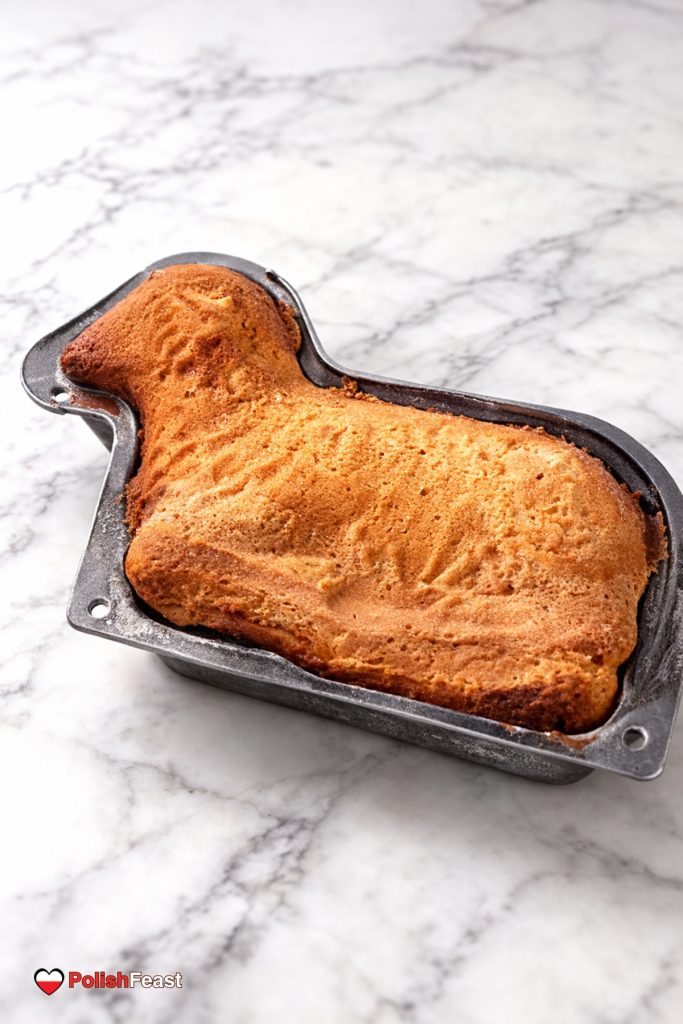
Cool 10 minutes before unmolding.
(Patience here helps prevent breakage.)
Tips
- Grease every tiny crevice of the mold.
- If the lamb browns too quickly, tent loosely with foil.
- Trim the base with a serrated knife so the cake stands evenly.
- For extra stability, pipe a small amount of frosting under the lamb as “glue” on the serving plate.
Serving Suggestions
Traditionally, Polish Easter Lamb Cake is dusted generously with powdered sugar to resemble fluffy wool. You can also:
- Add a ribbon around the neck.
- Insert a small paper flag.
- Glaze lightly with a simple sugar glaze.
- Serve with fresh berries and lightly sweetened whipped cream.
It pairs beautifully with Polish Easter babka, mazurek, or a strong cup of coffee after Easter brunch.
Make-Ahead & Storage
You can bake the Polish Easter Lamb Cake 1–2 days in advance.
Store covered at room temperature for up to 3 days.
For longer storage, wrap tightly and freeze for up to 1 month. Thaw at room temperature before decorating.
Dust with powdered sugar just before serving for the freshest look.
Common Mistakes
- Not greasing the mold well enough Coat every crevice thoroughly with butter or baking spray with flour. Even small missed spots can cause sticking or breakage.
- Under-whipping the eggs and sugar Beat the full 5–7 minutes until pale, thick, and tripled in volume. This step creates the cake’s structure.
- Overmixing after adding flour Fold gently and stop once combined. Overmixing deflates the batter and makes the cake dense.
- Filling the mold too full Fill only 85–90% full to prevent overflow and preserve the lamb’s shape.
- Opening the oven too early Do not open during the first 35 minutes or the cake may collapse.
- Unmolding at the wrong time Let rest 10 minutes before removing. Too soon or too late can cause sticking or breakage.
- Using cold ingredients Room temperature eggs and yogurt whip better and create a lighter texture.
FAQ
Can I make Polish Easter Lamb Cake without a lamb mold?
You can bake it in a small loaf or round pan, but it won’t have the traditional shape that makes it so special.
Why did my lamb lose detail?
Usually from too much batter or under-greasing. Fill only 85–90% and grease every crevice.
Can I flavor it differently?
Yes! Lemon zest or almond extract are lovely additions.
Can I frost it?
Yes, but traditionally it’s dusted with powdered sugar, but a thin glaze or buttercream works if you want extra sweetness.

Polish Easter Lamb Cake (Baranek Wielkanocny)
- Total Time: 1 hour 15 minutes
- Yield: 1 lamb cake (3–4 cup mold) 1x
Description
A traditional Polish Easter butter sponge cake baked in a lamb mold. Light, tender, and perfect for your holiday table centerpiece.
Ingredients
- 1 cup all-purpose flour
- 1/4 cup cornstarch
- 1/2 cup + 1 tablespoon granulated sugar
- 1/3 cup unsalted butter, melted and cooled
- 3 large eggs, room temperature
- 1/3 cup thick plain yogurt or sour cream
- 1 teaspoon baking powder
- Pinch of salt
- 1/2 teaspoon vanilla extract (optional)
Instructions
- Preheat oven to 350°F (regular bake, not convection). Position rack slightly below center.
- Grease the lamb mold very thoroughly with butter or baking spray with flour. Dust lightly with flour and tap out excess. If using a two-piece mold, secure tightly and place on a baking sheet.
- Beat eggs and sugar on high speed for 5–7 minutes until pale, thick, fluffy, and tripled in volume. Do not rush this step.
- Reduce mixer speed and slowly drizzle in melted, cooled butter. Mix just until combined. Add vanilla if using.
- Whisk together flour, cornstarch, baking powder, and salt. Gently fold dry ingredients into egg mixture in two additions, alternating with yogurt. Mix just until smooth and airy.
- Fill mold 85–90% full. Tap gently to remove air bubbles.
- Bake 40–45 minutes. Do not open oven during first 35 minutes. Cake should be golden and center firm. Turn oven off and crack door open for 5 minutes before removing.
- Cool in mold 10 minutes before carefully unmolding onto a cooling rack. Cool completely before decorating.
Notes
- Grease every detail of the mold.
- Use room temperature eggs for maximum volume.
- Trim base for stability if needed.
- Dust with powdered sugar just before serving.
- Prep Time: 20 minutes
- Cook Time: 60 minutes
- Category: Dessert
- Cuisine: Polish
Nutrition
- Serving Size: 1 slice
- Calories: 210
- Sugar: 14g
- Fat: 10g
- Carbohydrates: 27g
- Protein: 4g
Nutrition Information
This website offers estimated nutritional details, which may vary depending on the specific ingredients used.



Where do you get the mold, seemed smaller than traditional one.
Where do you get the mold, seemed smaller than traditional one.
Can you put the lamb cake in a regular cake pan?
Yes, you can 😊
The lamb shape (baranek) is traditional for Easter, but the cake itself is just a simple, delicious batter that works perfectly in a regular pan too.
You can use a standard round or loaf pan—just adjust the baking time slightly (usually similar, but start checking a bit earlier with a toothpick).
It won’t have the lamb shape, of course, but it will taste exactly the same and still be perfect for Easter 💛