
What Is Sernik?
Sernik is a traditional Polish cheesecake made with farmer’s cheese, called twaróg. It is dense, creamy, and slightly tangy. Unlike American cheesecake, sernik has a more natural texture because the cheese is ground, not whipped.
Sernik has been a beloved dessert in Poland for centuries, and every family has its own favorite version. Some prefer it plain, while others dress it up with fruit glazes, powdered sugar, or even a chocolate drizzle. It’s a dessert that tastes like home and tradition!
This is the kind of cake that tastes even better the next day.
Why I Love This Homemade Polish Cheesecake -Sernik?
This is the sernik I bake when I want a cake that never fails. It is creamy, not dry, and not overly sweet. I’ve made it for holidays, birthdays, and quiet weekends at home.
The smell while it bakes is pure comfort. And the best part? You don’t need fancy skills. If you follow the steps and take your time, you will get a perfect Polish cheesecake every time.
If you enjoyed this recipe, I also recommend my Polish Papal Cake — another classic favorite.
Key Ingredients & Substitutions for Sernik
Tip: Take all ingredients out of the fridge at least 1 hour before baking. Room-temperature ingredients make a smoother cheesecake.
- Farmer’s Cheese: The star of the show! For the creamiest texture, make sure to grind the cheese until smooth. If you can’t find farmer’s cheese, softened cream cheese works well as a substitute. You can also make this Homemade Polish Twaróg.
- Butter: Adds richness to the batter and ensures a velvety finish. Use unsalted butter for the best flavor.
- Potato Starch: Helps to bind the cheesecake and gives it a lovely texture. Cornstarch can be used as an alternative.
- Vanilla Pudding Powder: A Polish classic! This adds flavor and helps stabilize the cheesecake. Instant pudding works best. If you don’t have vanilla pudding powder, replace it with 2 tablespoons of cornstarch plus 1 teaspoon of vanilla extract. This will help the cheesecake set properly while maintaining a similar texture and flavor.
- Heavy Cream: Adds moisture and creaminess to the batter. You can substitute with full-fat sour cream if needed.
Equipment You’ll Need
- Springform Pan: Essential for a cheesecake that releases cleanly and looks picture-perfect.
- Electric Mixer: Makes creaming the butter and sugar a breeze.
- Parchment Paper: For lining the pan and preventing sticking.
- Food Processor: Perfect for grinding the farmer’s cheese until smooth.
- Cooling Rack: To cool the cheesecake evenly and prevent condensation.
Step-by-Step Instructions for Perfect Polish Cheesecake
Step 1: Prep the Cheesecake Base
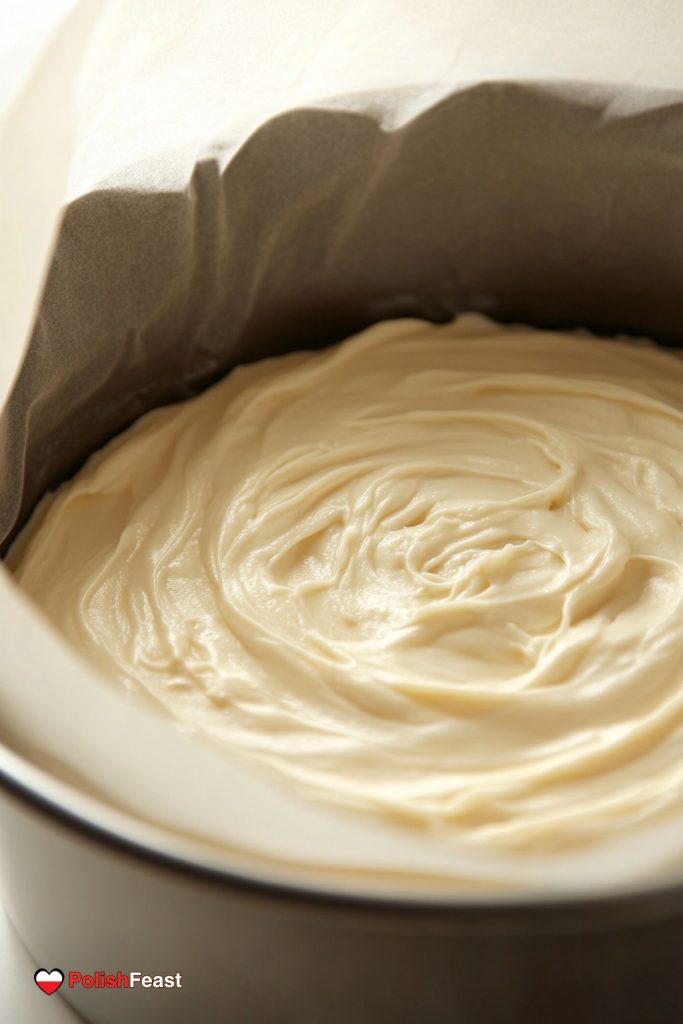
- Preheat your oven to 340°F (170°C). Grease a 10-inch (26 cm) springform pan with butter and line the bottom with parchment paper. For extra flavor, dust the pan with breadcrumbs or ground almonds. You can also use crushed crackers mixed with 3 tbsp melted butter, to create a base. (We love all of these options!)
Step 2: Cream the Butter and Sugar
- In a large bowl, beat the softened butter and sugar with an electric mixer until light and fluffy. Add the egg yolks one at a time, mixing well after each addition.
Step 3: Combine Cheese and Dry Ingredients
- Gradually add the ground farmer’s cheese to the butter mixture, mixing on medium speed. Add the vanilla pudding powder and potato starch, blending until smooth. Slowly pour in the heavy cream, mixing until fully incorporated.
Step 4: Whip the Egg Whites
- In a separate bowl, beat the egg whites to stiff peaks. Gently fold them into the batter, taking care not to deflate the mixture.
This step makes the cheesecake lighter. Fold slowly and gently. Stop as soon as the batter looks combined.
Step 5: Bake the Cheesecake
- Pour the batter into the prepared springform pan and smooth the top with a spatula. Bake for about 60 minutes, or until the top is golden brown and the center is set.
Step 6: Cool Gradually
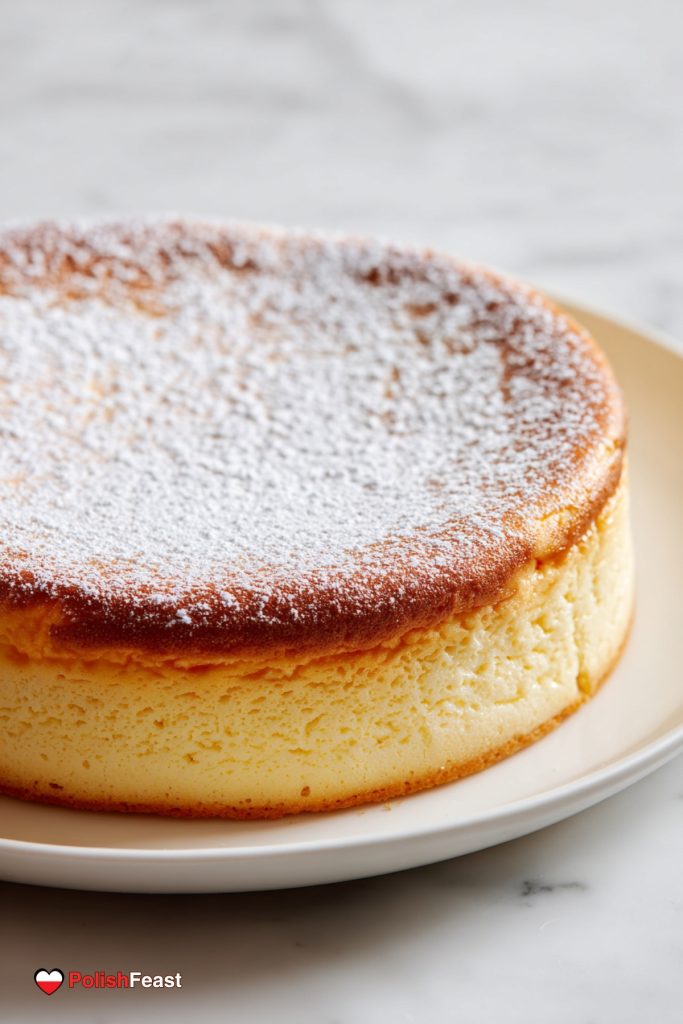
- Turn off the oven, crack the door open slightly, and allow the cheesecake to cool inside for an hour. Remove from the oven and let it cool completely before removing from the pan.
Do not skip this step. Sudden temperature changes can cause cracks.
Step 7: Serve and Enjoy
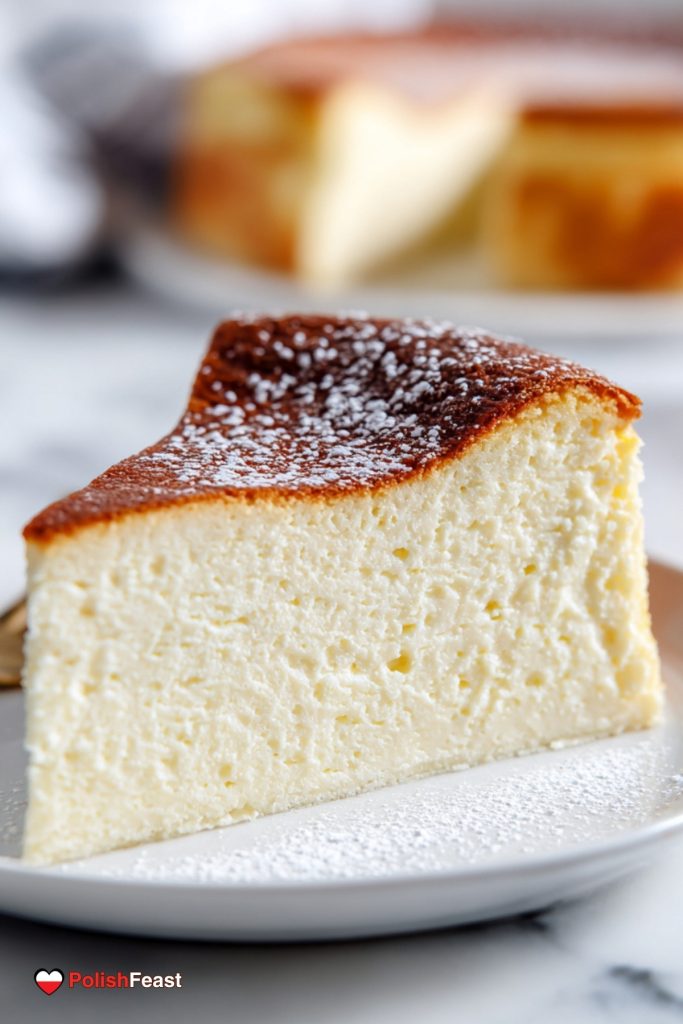
- Dust with powdered sugar, drizzle with chocolate, or top with fresh fruit—your choice! Slice and serve.
Expert Tips for Perfect Sernik
Smooth Cheese Texture: The key to a perfect Sernik is the consistency of the farmer’s cheese. It should be ground until creamy, ensuring your cheesecake’s filling is smooth without any lumps.
Gentle Folding: When incorporating the whipped egg whites into the batter, fold them in gently to maintain the airiness. This helps create a lighter texture in the final cheesecake.
Oven Temperature: Bake your Sernik at the recommended temperature and watch closely towards the end of baking time to prevent over-browning.
Cooling Process: Let the Sernik cool gradually in the oven with the door slightly ajar. This slow cooling helps prevent cracks from forming on the surface.
Common Sernik Mistakes (And How to Avoid Them)
The cheesecake cracked: This usually means the oven was too hot or the cake cooled too fast. Always cool it slowly in the oven.
The texture is grainy: The cheese was not ground enough. Always process farmer’s cheese until smooth.
The cake is too dense: The egg whites were overmixed or deflated. Fold gently and stop early.
The top browned too fast: Cover loosely with foil during the last 15 minutes if needed.
Serving Suggestions & Topping Ideas
Sernik is versatile when it comes to serving and toppings. Here are some delicious ideas to elevate your cheesecake experience:
- Classic Powdered Sugar: A simple dusting of powdered sugar adds a touch of sweetness and elegance.
- Fresh Fruit: In the summertime, when i have fruits in the garden i like to add them to my sernik. My favorite are strawberries, blueberries and peaches, but you can add whatever you like!
- Fruit Glazes: Top your Sernik with a glaze made from raspberries, strawberries, or blueberries for a fresh, tangy contrast.
- Whipped Cream: Serve each slice with a dollop of whipped cream for an extra creamy texture.
- Citrus Zest: Sprinkle lemon or orange zest over the cheesecake for a burst of citrusy brightness.
- Chocolate Drizzle: For chocolate lovers, a drizzle of melted dark or milk chocolate can transform your Sernik into a decadent dessert.
How to Properly Store Sernik?
Storing your Sernik correctly ensures you can enjoy this delightful dessert to the fullest:
Cool Completely: Before storing, allow the Sernik to cool completely at room temperature to avoid condensation and sogginess.
Refrigerate: Wrap the cheesecake tightly in plastic wrap or store in an airtight container. Sernik can be refrigerated for up to 5 days.
Freezing for Longer Storage: Sernik freezes beautifully. First, freeze the cheesecake on a baking sheet until solid to preserve its shape. Then, wrap it in plastic wrap followed by aluminum foil to prevent freezer burn. It can be stored in the freezer for up to 3 months.
Thawing: When you’re ready to enjoy your frozen Sernik, thaw it in the refrigerator overnight. This slow thawing process helps preserve the creamy texture of the cheesecake.
Refreshing the Cheesecake: Before serving a refrigerated or thawed Sernik, consider letting it sit at room temperature for about 30 minutes. This enhances the flavor and makes the texture more creamy.
FAQ
Can I use a smaller pan?
A 9-inch pan works, but make sure it’s deep enough to hold all the batter. Leftover batter can be baked as mini cheesecakes.
Can I use cream cheese instead of farmer’s cheese?
Yes! Softened cream cheese works as a substitute, though the flavor and texture will be slightly different.
What is Polish cheesecake made of?
Polish cheesecake, known as Sernik, is made from farmer’s cheese (or quark), eggs, sugar, and often includes ingredients like heavy cream, potato starch for binding, and sometimes vanilla for flavor. It’s known for its creamy texture and rich taste.
What is the difference between Polish cheesecake and New York cheesecake?
The main difference is the cheese used: Polish cheesecake uses farmer’s cheese or quark, giving it a slightly grainy, yet creamy texture, while New York cheesecake is known for its smooth, rich creaminess from cream cheese. Additionally, New York cheesecake often has a graham cracker crust, whereas Polish cheesecake typically does not.
Why is vanilla pudding used in Polish cheesecake?
Vanilla pudding powder is very common in Polish baking. It adds flavor and helps the cheesecake set without becoming heavy.
Does Polish cheesecake have a crust?
Traditional Polish sernik is often made without a crust. This keeps the focus on the creamy cheese filling.

Traditional Sernik – Classic Polish Cheesecake
- Total Time: 1 hour 10 minutes
- Yield: 14 Portions 1x
Description
This Polish Cheesecake – Sernik recipe is light, smooth, and so delicious! A traditional treat that’s easy to make and perfect for family gatherings or festive celebrations, like Christmas or Easter!
Ingredients
- 2 pounds Farmers cheese (grounded until creamy)
- 1 cup Unsalted butter (softened)
- 3/4 cup Granulated white sugar
- 4 medium Eggs (room temperature)
- 1 packet Vanilla pudding (1/3 cup or 40g) – or 2 tbsp of cornstarch with 1 tsp vanilla extract
- 1/3 cup Heavy cream
- 4 tablespoons Potato starch
Instructions
- Prep the Cheesecake Base: Preheat your oven to 340°F (170°C). Prepare a 10-inch (26 cm) springform pan by greasing it with butter and lining the bottom with parchment paper, or dusting it with breadcrumbs or ground almonds.
- Cream Butter and Sugar: In a large mixing bowl, beat the softened butter with the granulated sugar until light and fluffy. Incorporate the egg yolks one at a time, ensuring each is fully blended before adding the next.
- Combine Cheese and Dry Ingredients: Gradually mix in the ground farmer’s cheese on a medium speed. Add the vanilla pudding mix and potato starch, blending until the mixture is smooth. Slowly pour in the heavy cream, continuing to mix until all ingredients are well combined.
- Whip the Egg Whites: In a separate, clean bowl, beat the egg whites to stiff peaks. Gently fold the whipped whites into the cheesecake batter, ensuring not to deflate the mixture. Do not over mix it.
- Bake the Cheesecake: Pour the cheesecake into the prepared springform pan. Smooth the top with a spatula. Bake in the preheated oven for about 60 minutes, or until the cheesecake is set and the top is a light golden brown.
- Cool Gradually: Turn off the oven, slightly crack open the door, and allow the cheesecake to cool inside for an hour. Afterward, remove from the oven and let it cool completely before removing from the pan.
- Serve: Dust with powdered sugar or top with a glaze of your choice.
Notes
- If you cant find farmers cheese you can substitute it with softened cream cheese.
- Ensure the cheese is finely ground for a smooth texture. A food processor can help achieve the desired consistency if the cheese is too coarse.
- The slow cooling process in the oven helps prevent cracks on the surface of your cheesecake, a common issue with this type of dessert.
- For an extra indulgent treat, serve with a dollop of whipped cream and a sprinkle of fresh vanilla or citrus zest.
- Prep Time: 10 minutes
- Cook Time: 1 hour
- Category: Dessert
- Cuisine: Polish
Nutrition
- Calories: 207
Nutrition Information
Per 1 Serving:
Calories: 207, Carbs: 25g, Fat: 39g, Protein: 57
This website offers estimated nutritional details, which may vary depending on the specific ingredients used.


Instant vanilla pudding powder or cooked vanilla pudding powder? Special brand?
Hey Marlene! Use instant vanilla pudding powder (without cooking). This will create the perfect Polish cheesecake structure, after baking. I like to use a Polish „Budyń Waniliony” from any brand, but any other instant vanilla pudding powder will do.
Do you mean 40g of vanilla pudding mix, or do you mean 1/3 of a cup? Assuming 1g = 1ml, 1/3 cup should be 80g.
Good catch! 😊 The correct amount is 40g of vanilla pudding powder. Different brands vary in density, which is why the cup measurement isn’t always exact. If you’re using a scale, I recommend following the 40g measurement for the most reliable results.
Great recipes I have my Polish soup every Easter it’s not Easter without it with boiled eggs Kielbasa in it also.. Sincerely. Roseanne Leblanc
Great Recipe.
Can we use 9-inch springform pan? In this case, what will be the Ingredient quantities?
Secondly, can we use corn starch, in place of potato starch?
Thirdly, at the end of cooking, can we just switch off the power, for the oven to cool very slowly.
Hello! Yes You can use 9-inch springform pan, just make sure that its deep enough to fit all of the cheesecake. (If not I love to use the leftover batter for small desserts in cupcake shapes – they bake for around 20 minutes in the same temperature). And yes, corn starch can be used instead of potato starch in the same quantities. And to answer your third question – You must open the oven door to prevent condensation. You cannot leave the oven door fully closed, because water droplets can form on top of the cheesecake :).
Great recipe
Great yummy recipe
Followed your impeccable instructions and recipe to the tee.
This is day #2. Waiting to taste my first piece.
What is the best way to cut the servings????
Large wedges as illustrated? That large of a slice looks delicious but that might be incredibly rich for me.
Sorry for the late reply! I’m so happy you followed the recipe exactly—thank you! 😊 You can definitely cut it into large wedges, as shown, but if you prefer a lighter portion, smaller slices will still be just as delicious. It all depends on what feels right for you! How did it turn out? I’d love to hear what you thought! 😊
Can I put the cheese through a sieve?
What is vanilla pudding?
What is potato starch?
Thank you.
Yes, you can put the cheese through a sieve—it makes it nice and smooth. If you don’t have vanilla pudding mix, you can use 1 tbsp cornstarch and a little sugar and vanilla instead. For potato starch, you can also use cornstarch as a substitute in the same amount. Hope that helps!
Is there a graham cracker crust on the Sernik? It sure looks like it in one of the pictures.
No 😊 Traditional Polish sernik usually does not have a graham cracker crust, and this recipe is made without one.
The photos are showing the cheesecake itself and the parchment-lined pan, not a graham cracker crust. If you’d like, you can add a crust by mixing crushed graham crackers with melted butter, but that’s optional and not part of a traditional Polish sernik recipe. The focus is usually on the creamy cheese filling rather than a crust. 💛
I just made this recipe. Was super excited. It took longer than the recipe said, the cheesecake was very wiggly and not set. Laid foil on top cause it was browning. It was so high to the top. Opened oven door to let cool and within 10 minutes it fell. What did I do wrong?
I’m sorry that happened! 😊 From what you described, it sounds like the cheesecake may have needed a bit more baking time before cooling. Sernik should still have a slight jiggle in the center, but it shouldn’t be very wiggly throughout. If it is underbaked, it can rise during baking and then collapse as it cools.
A few other things that can contribute are using a smaller pan than recommended, very large eggs, or extra moisture in the cheese. Every oven is a little different, so sometimes a cheesecake needs 10–20 minutes longer than the recipe states.
The good news is that even if it sank, it should still taste delicious! 😊
can I use cottage cheese
Yes, you can use cottage cheese for traditional sernik if you can’t find twaróg. 😊 Just blend the cottage cheese until completely smooth before using it in the recipe. If it seems very wet, drain off some of the excess liquid first.
The texture will be a little creamier than a traditional Polish sernik made with twaróg, but it will still turn out delicious!
Delicious! Thanks for the recipe!
You are very welcome!